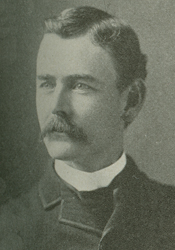
Clark Cemetery And Three Notable Residents

https://www.facebook.com/reel/1984460812290062

On October 15, 2025, the Huntingdon TN Historical Society had their monthly meeting. Clark Cemetery, located on Carter Lane in Huntingdon, TN was the subject matter. Above is the video of the presentation.

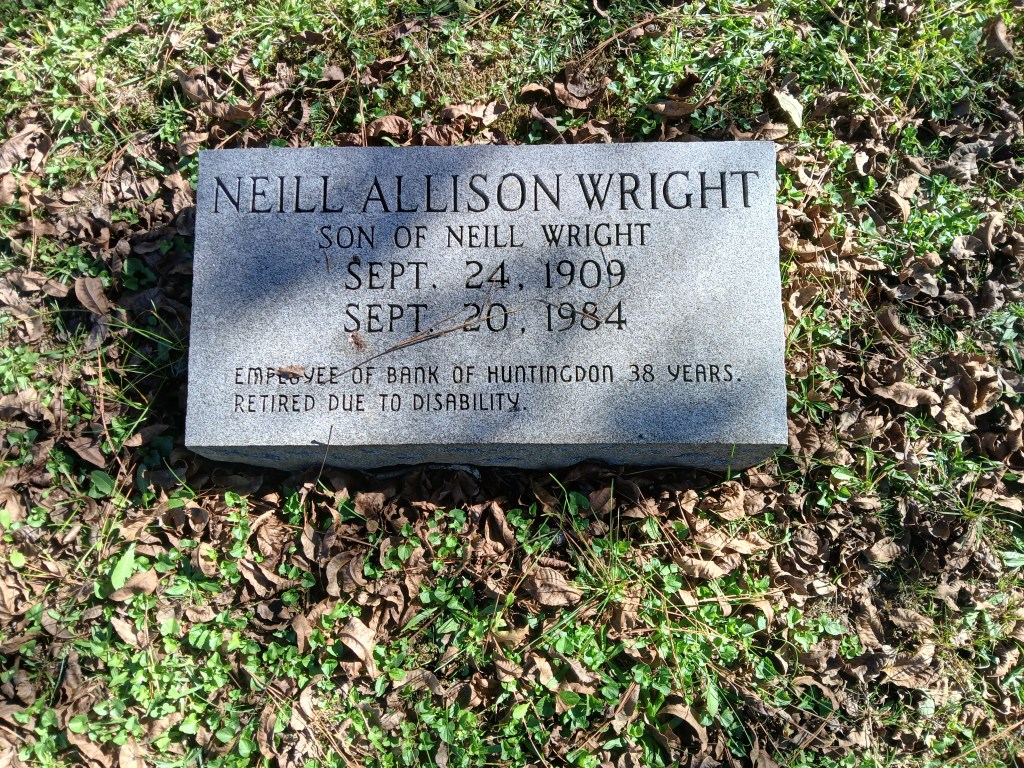
The cemetery was named after Colonel John Clark, who was the son of Samuel and Rachel Clark of North Carolina. Colonel John Clark’s wife, Rebecca Covington, was the daughter of John and Mary Covington of Maryland. Colonel Clark served in the War of 1812 and, after the war, moved to Huntingdon, Tennessee. Colonel John Clark provided this cemetery as a burying ground for his descendants. It was maintained as a private cemetery until Admiral A.C. McNeill, a descendant, allowed others to be buried in the cemetery. The cemetery is jointly maintained by the Town of Huntingdon and by the Wright Family Trust Fund. Neill Alison Wright and his wife so loved the Town of Huntingdon that they developed the Wright Family Trust to donate to the cemetery and also to the surrounding area. Neill A. Wright is believed to be the last desdendant of the Clark family.

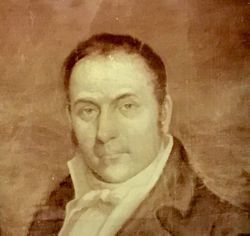
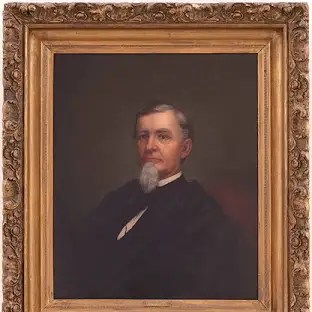
Pictured above is Colonel John Clark who was born in 1773 and died in 1850.
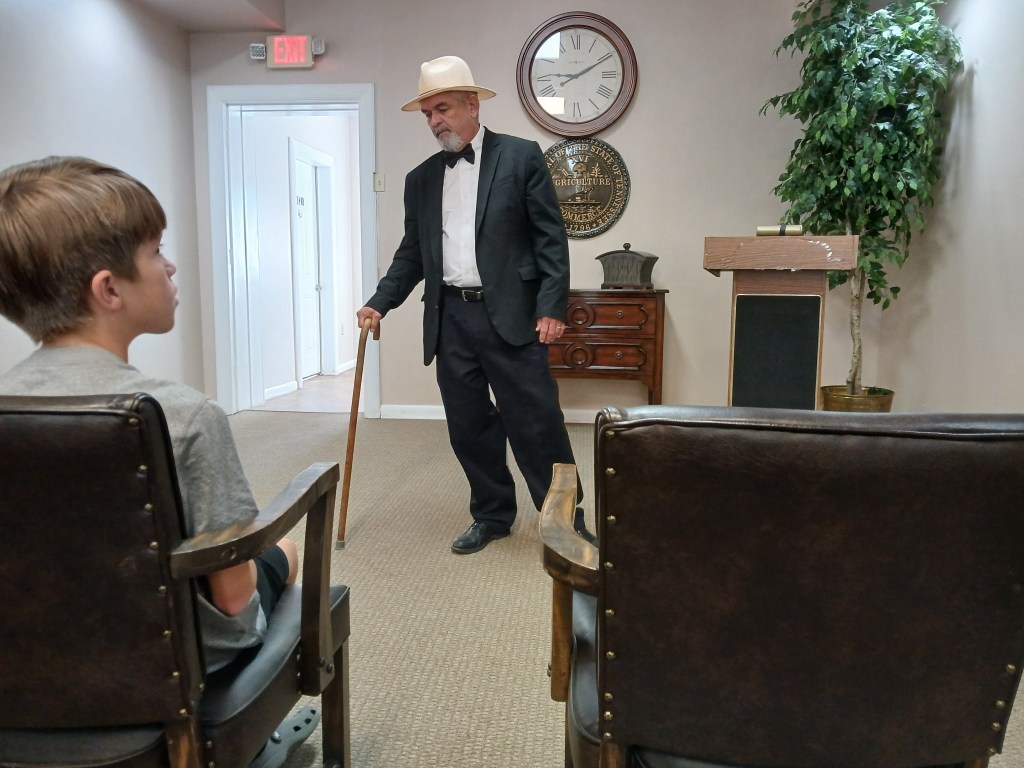
The first resident of Clark Cemetery to address the crowd was Walter Grizzard. Captain Grizzard commanded the company that was involved with General Nathan Bedford Forrest’s raids into West Tennessee. Captain Grizzard was also involved in the Battle of Parkers Crossroads. His friend and cohort was Major James B. Algee.
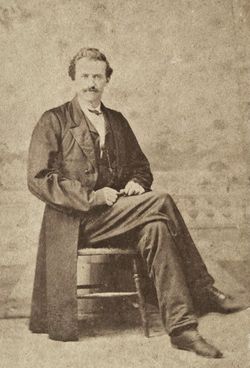
Pictured above, Major James B. Algee. Born in 1828 and died in 1863 in Hickman, Kentucky.

Major James B. Algee and Captain Grizzard had traveled together while on furlough. They had traveled to visit their families in West Tennessee. After the furlough, and on their way back to their duties in the Civil War, they were both captured. Major James B. Algee was sick at the time. Major Algee was taken to a prison that was located in Kentucky, which is where he died. He is buried somewhere outside the prison on a hill. However, there is a tombstone located in Clark Cemetery for him.

The account of the capture of Captain Grizzard and Major Algee was written by Captain Grizzard after the war around 1913. The account is captured at jstor.org/stable/42621073, for those who are interested in reading the account.

Walter B. Grizzard was born in 1833 in Huntingdon, TN and died in 1918 in Huntingdon, TN.
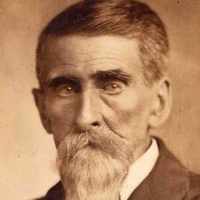
Walter Boggan Grizzard.

The next resident of Clark Cemetery to present to the group present was Rebecca Covington Clark, of the North Carolina Covington’s. Rebecca Covington was born in 1757 and died in 1848. Colonel John Kelly Clark was her husband. John and Rebecca Clark lived in North Carolina for a number of years after they were married. They moved from North Carolina to West Tennessee and settled in the area that was to become Huntingdon. John and Rebecca had two daughters. Colonel John Clark fought in the war of 1812 and he also served in the state legislature. In 1837, John Clark built a home for his daughter Julia and her husband, James. That home is now the oldest home in Huntingdon and is known as the Portis home.
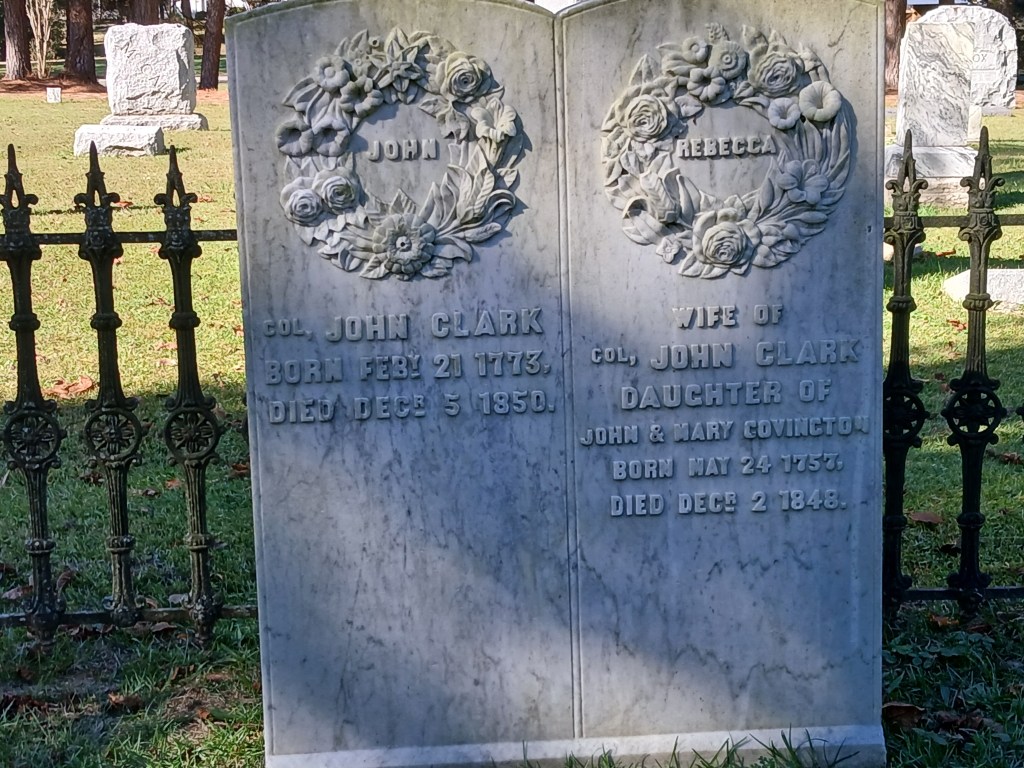
Tombstone for John and Rebecca Clark in the Clark Cemetery.
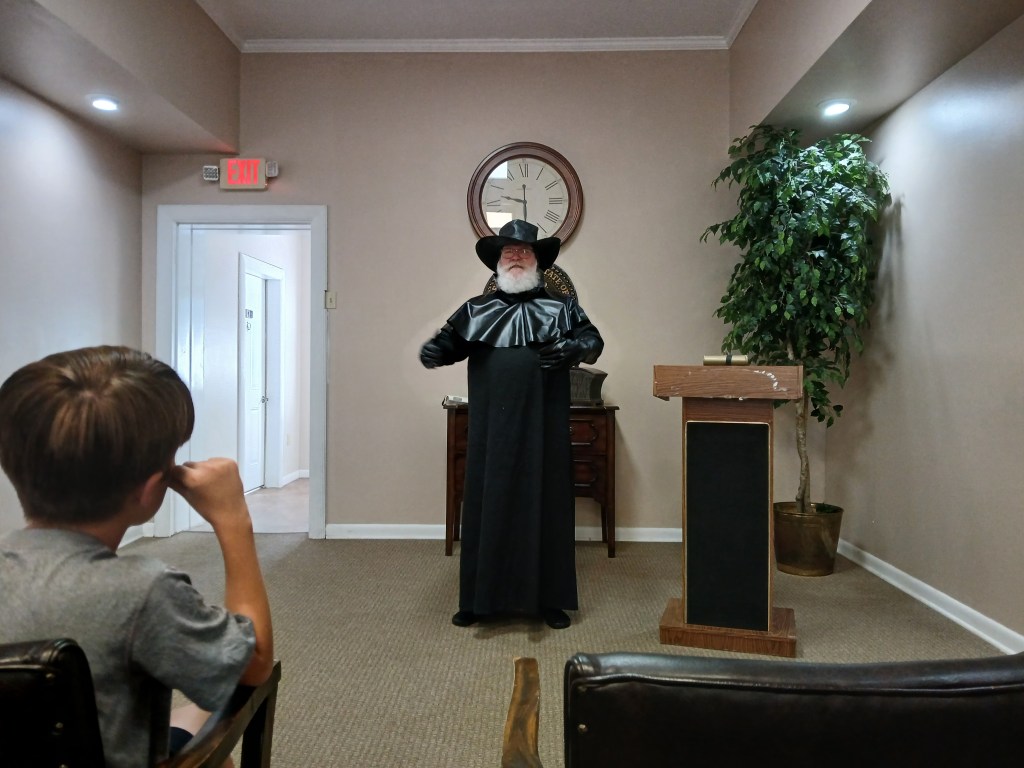
The final visitor to the meeting on October 15th was Dr. J. W. McCall, born in August of 1832. Dr. J.W. McCall was the ninth of ten children. His parents were Andrew and Jane Todd McCall. He was raised on a farm and attended the early schools in Carroll County. His brother, Dr. Henry McCall, had a practice in Clarksburg, Tennessee. J. W. McCall began his study of medicine in his brother’s Clarksburg office. Dr. McCall went to the University of Nashville and graduated in 1857. Dr. J. W. McCall attended Columbia University and also Tulane in Louisiana. In 1862, he became the assistant surgeon in the United States Army for the Seventh Tennessee Calvary. In 1858, he married Victoria Wilson, who was from Henderson County. They had four children: Lenora, Emma, James, and Fannie. The son, James Henry, became a doctor as well and graduated from Vanderbilt in 1896. James Henry, like his father, also went into the military. Lenora Josephine married Governor Hawkins son. Fannie married a Johnson and moved to Utah.

Above, the tombstone for Dr. J.W. McCall in the Clark Cemetery.
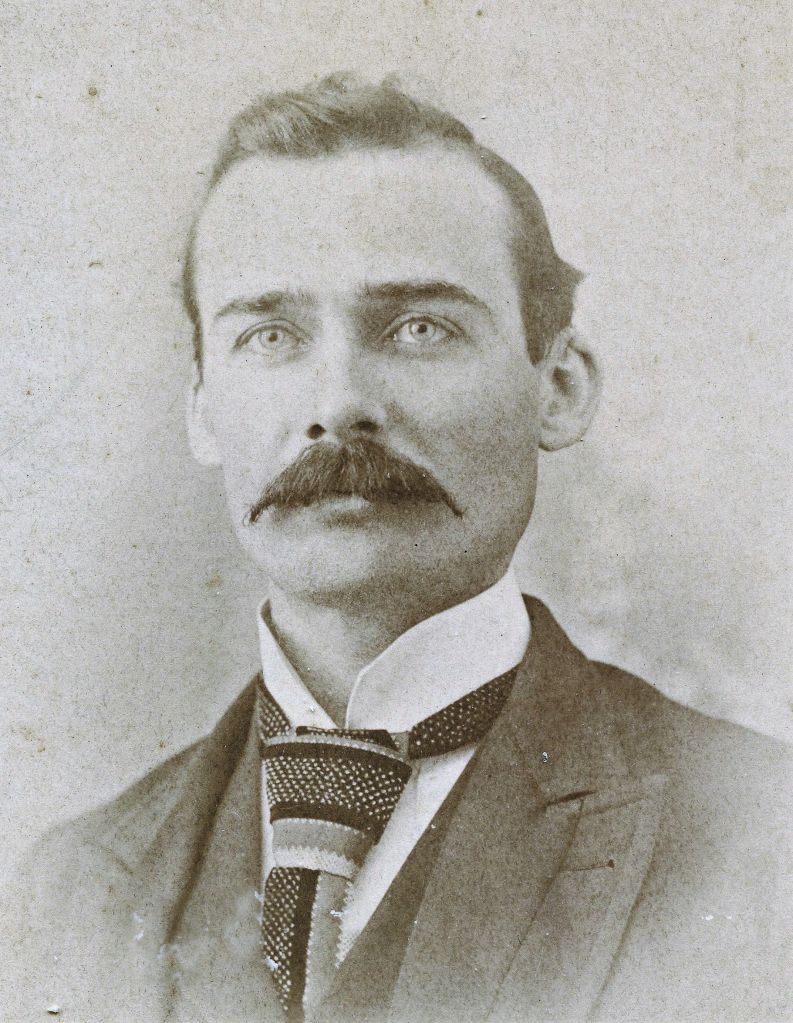
Image of James Henry McCall, Dr. J.W. McCall’s son.
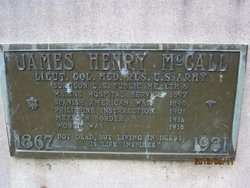
Tombstone for Dr. James Henry McCall.
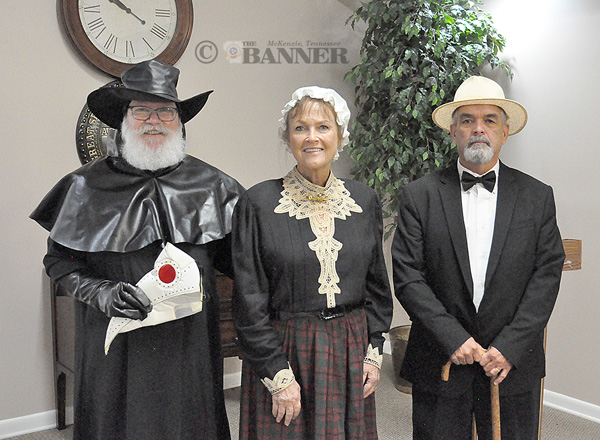
Many thanks to these wonderful members of our community who role played the historical characters on this day. Dr. Lee Carter as Dr. J.W. McCall. Melissa Powell as Rebecca Covington Clark. And last, but not least, Mr. Johnny McClure as Captain Grizzard. Thank you all very much.
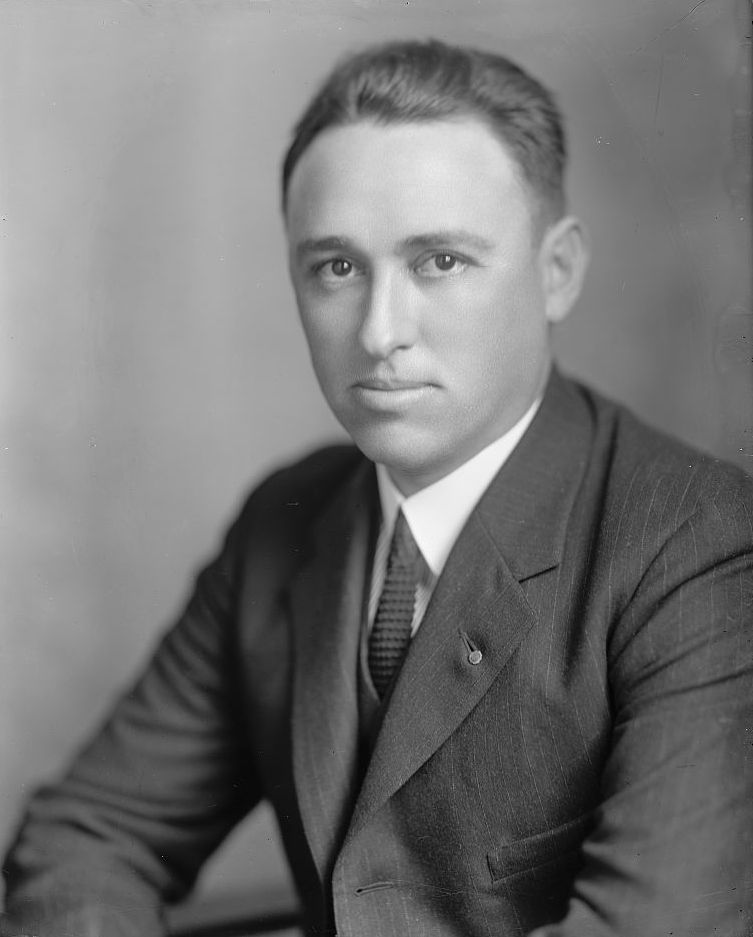
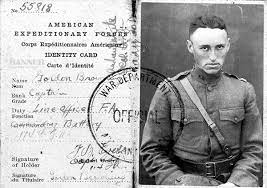
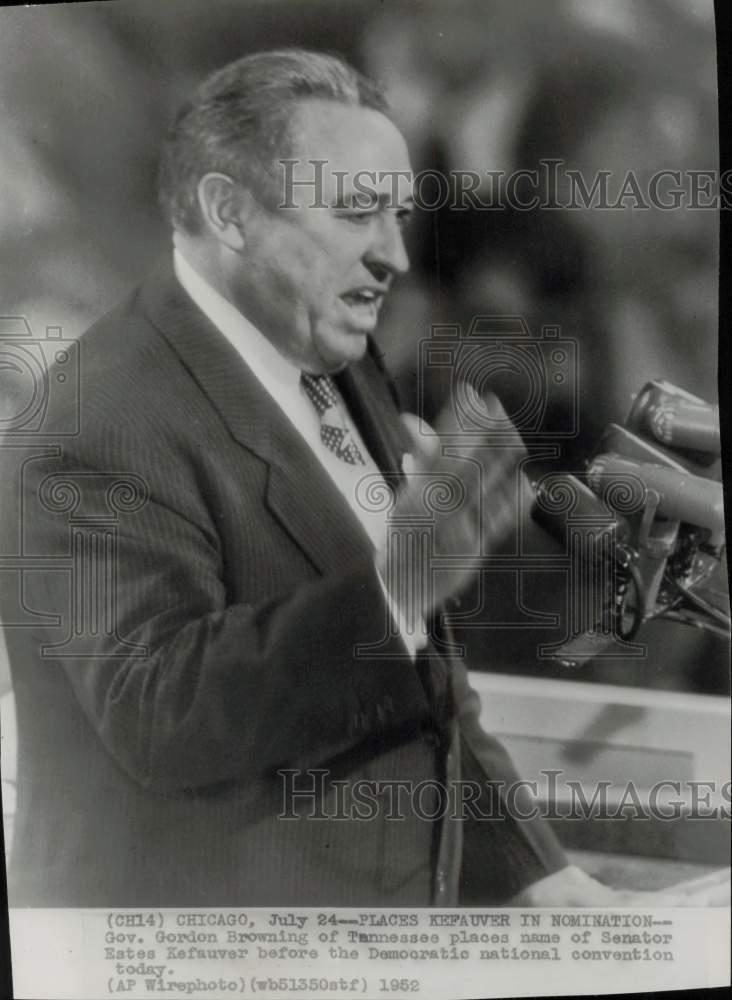
Gordon Weaver Browning

Gordon Weaver Browning was born in Carroll County near Atwood on November 22, 1889. He attended public schools until he began his college career. Gordon Browning received his B.S. at Valparaiso University in Indiana in 1913. He graduated from Cumberland University Law School in 1915. After being admitted to the bar, he began his law practice in Huntingdon, Tennessee.

In 1917, Gordon Browning enlisted in the National Guard. While in the National Guard, he was promoted to First Lieutenant and Captain. Gordon Browning served in France during the first World War. In 1919, Gordon Browning was discharged from service and he then resumed his law practice in Huntingdon.

Gordon Browning served six terms in the United States House of Representatives from 1923 to 1935. Gordon Browning became the 38th governor of the State of Tennessee and served from 1937 to 1939.

On February 17, 1943, he was appointed captain in the United States Army and he advanced through the ranks to Lieutenant Colonel. During WWII, he acted as deputy head of the Belgium-Luxembourg missions until January of 1946.

From 1942-1949, Governor Browning served as the Chancellor of Tennessee’s Eighth Chancery District. Governor Browning again served another term as Governor of the State of Tennessee from 1949-1953.

While Governor of the State of Tennessee, Governor Browning had many achievements. He helped to bring Tennessee’s state debt down. He also established the first effective retirement system for teachers as well as establishing a minimum salary for teachers. The poll tax for women and veterans in the primary was abolished. This is but a few of the accomplishments.

Governor Browning has the distinction of serving in both World Wars. After retiring from his political career, Governor Browning returned to his law practice in Huntingdon, where he remained until his death in 1976. The City of McKenzie now has the Gordon Browning Museum where Governor Browning’s life is showcased.

For the video presentation of Governor Gordon Browning by local attorney Gus Radford, please go the following link:

https://www.facebook.com/61550545093433/videos/1834082150430973

Three Prominent Tennesseans

On November 20, 2024 Judge Donald Parish spoke at the Huntingdon TN Historical Society. His program revolved around three prominent Tennesseans from the past: Justice Howell Edmunds Jackson, Attorney Milton Brown, and Judge John Ethridge McCall.

Justice Howell Edmunds Jackson was born April 8, 1832 in Paris, Tennessee, was the son of a wealthy family. In 1840, the family moved to Jackson, Tennessee. He graduated from West Tennessee College in 1849. He then attended the University of Virginia at Charlottesville and graduated in 1854. Justice Jackson then studied law at Cumberland University in Lebanon Tennessee. He graduated in 1856. Judge Jackson was admitted to the bar and began practicing law in Jackson, Tennessee. Judge Jackson then moved to Memphis, Tennessee.

During the Civil War, Judge Jackson was pro-slavery and was opposed to succession. While in the Confederacy, Judge Jackson was a receiver of sequestered property. In 1862, the Union Soldiers ran the Confederates out of the government in West Tennessee. Following the Civil War, Judge Jackson was charged with treason. He was pardoned by President Johnson and was allowed to practice law again.

In 1874, Judge Jackson returned to Jackson and served on the court of arbitration for West Tennessee by appointment on two occasions. In 1880, Judge Jackson was elected as State Representative. He then was elected to the United States Senate and served from March 4, 1881 to April 14, 1886.

Judge Jackson resigned from the Senate because he had been offered and he had accepted the appointment of United States Circuit Judge for the sixth Federal Circuit. Due to the death of Lucius Q. C. Lamar, a vacancy became available on the United States Supreme Court. Judge Jackson was appointed by the President and was confirmed by the Senate to that open position on the Supreme Court. Judge Jackson served on the Supreme Court from March 4, 1893 to August 8, 1895, when Judge Jackson died. Judge Jackson died in West Meade, Tennessee.

Two interesting facts about Judge Jackson: First, while on the Supreme Court, a question regarding the income tax was raised before the Supreme Court. The income tax was held to be unconstitutional by the court, however, Judge Jackson had sided with the government on this decision. Secondly, Judge Jackson was the only Supreme Court Justice to license his image to the cigar company. Do you recognize him?

M

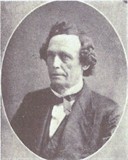
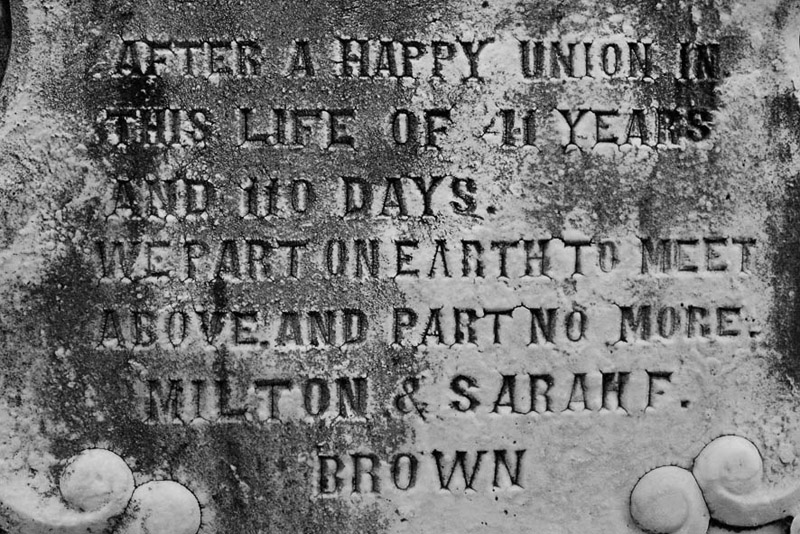
Milton Brown, pictured above, was born in 1804 in Ohio. He migrated to Nashville in 1823, where he studied law in the office of Felix Grundy. After being admitted to the bar, Milton Brown practiced law in Paris, Tennessee. In 1832, Milton Brown moved to Jackson, Tennessee where he became actively involved in the community.

In 1834, the notorious criminal John Murrell had been apprehended and charged with theft and murder. A list of the many crimes that John Murrell committed included counterfeiting, horse theft, and slave stealing, all considered to be very serious crimes in the pre-civil war south. John Murrell was so notorious and disliked at this time, that no one wanted to represent John Murrell. It was then that Judge Joshua Haskell appointed Milton Brown to defend John Murrell.

Milton Brown’s strategy was to concede to the theft, but defend as to the murder charges. Milton Brown’s oratory and defense skills were so good, that John Murrell was found not guilty of murder and guilty of theft. As a result, John Murrell spent ten years in prison.

Milton Brown was appointed Chancellor of West Tennessee in 1837 and in 1839 he ran as the Whig nominee for the United States House of Representatives, which position he won. In 1845, Milton Brown was responsible for the deadlocked breaking resolution which allowed Texas into the Union.

Later in life, Milton Brown became president of the Mississippi Central and Tennesee railroads from 1854-1856. He was then president of the Mobile and Ohio railroads from 1856-1871. Milton Brown was a charitable person and was instrumental in the founding of Union, Lambuth, and Vanderbilt universities. Milton Brown died in 1883 and was laid to rest in Jackson’s Riverside Cemetery.

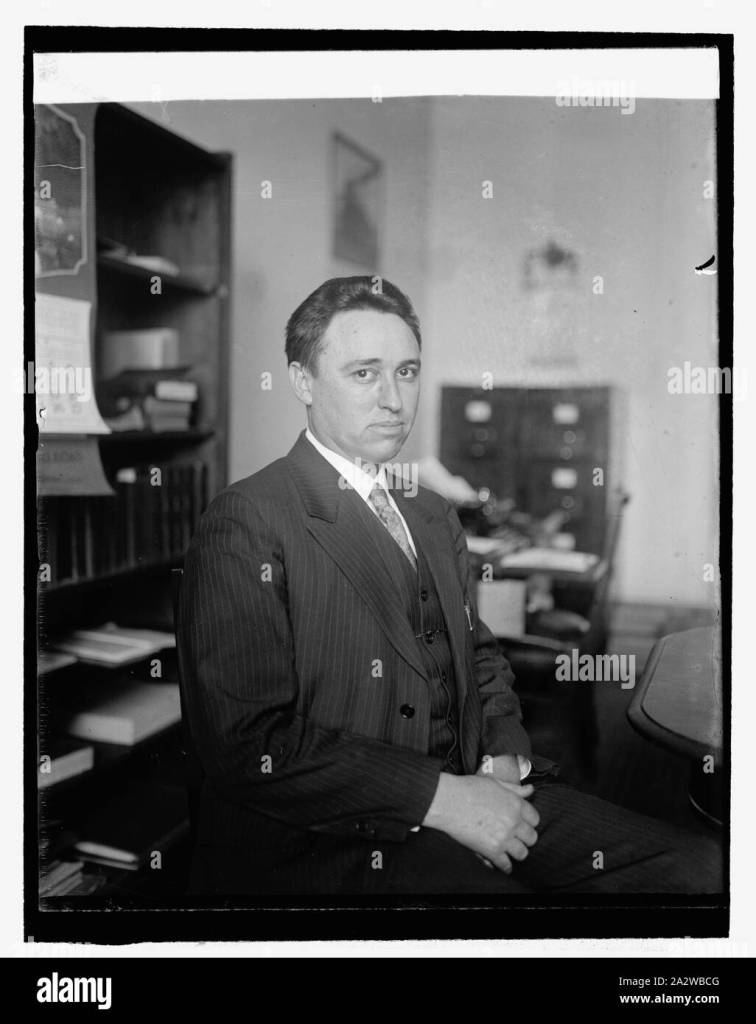
John Ethridge McCall, pictured above, was born in 1859 in Clarksburg, Tennessee. He graduated from the University of Tennessee at Knoxville in 1881. He then studied law in Huntingdon, Tennesee. He was admitted to the bar in 1882 and began his practice of law in Huntingdon, TN. Also, in 1882, he became the editor of the Tennessee Republican. He became a member of the State house of representatives from 1887-1889. He was appointed assistant United States district attorney for West Tennessee in 1890. He was elected as a Republican to the Fifty-fourth Congress and served from March 4, 1895 – March 3, 1897. He was a candidate for Governor of the State of Tennessee in 1900. From 1902 – 1905, John McCall was a collector for the Internal Revenue Service. On January 17, 1905, he was appointed by the President of the United States to United States District Judge for the western district of the State of Tennessee. Judge McCall remained on the district court until his death on August 8, 1920. He was laid to rest at Forest Hill Cemetery in Memphis, Tennessee.

While most of the information gleamed for this article came from the Honorable Judge Donald Parish, this writer also needs to acknowledge information also came from TBA Law Blog in an article written by Russell Fowler, the Tennessee Encyclopedia in an article written by Russell Fowler, and information was gleamed from History, Art, and Archives United States House of Representatives.

The Huntingdon TN Historical Society has a Facebook page where there is a video of Donald Parish presenting this history. Please come and join us in learning and sharing the history of Carroll County and of the State of Tennesse.