The Dixie

https://www.facebook.com/share/v/1GnESyFX1V

On September 17, 2025, the Huntingdon TN Historical Society went to The Dixie, in Huntingdon, TN in order to conduct their monthly meeting. Above is the video associated with the presentation. At this meeting, Ms. Jean Newsome and Ms. Susan Cary gave the history of The Dixie. The full history of The Dixie is on The Dixie’s webpage at: dixiepac.net/history-and-mission. The following is a summary of the history of The Dixie.

Above is the famous Dixie Carter as she explains what it means to be raised in a kind and nurturing atmosphere. Home. That is what Tennessee means to a lot of us. Home. Where our parents and ancestors lived and died. Home. Where we are loved and accepted by our family members and community members. Home. Where people try to be kind and considerate of others. Home. Where we, as members, are safe. Home is not perfect. The only perfect home is in Heaven. But this, in this case, Huntingdon, Tennessee is home.

The Dixie Carter Performing Arts Center was named after one of Carroll County’s most famous personages – Dixie Carter. Dixie Carter was born in McLemoresville, Tennessee in 1939. Dixie Carter became famous on the hit show, Designing Women. Dixie Carter played Julia Sugarbaker, one of the main roles. Dixie Carter also is known for her roles on Desperate Housewives and Family Law. Dixie made her debut in 1960 in a production of Carousel. She moved to New York City in 1963 and landed a role in an off Broadway production of Shakespeare’s A Winter’s Tale.

Dixie Carter moved to Los Angeles in 1979 and married actor Hal Holbrook in 1980. Besides the roles listed above, Dixie Carter had roles in Diff’rent Strokes and The Edge of Night, among many other roles.

Pictured below is the Mudslingers Studio, which is a part of The Dixie. The Mudslinger Studio offers classes in pottery to local people. The Dixie also offers music programs and Summer Camp programs.

The Dixie also offers tours and has recently renovated portions of The Dixie.
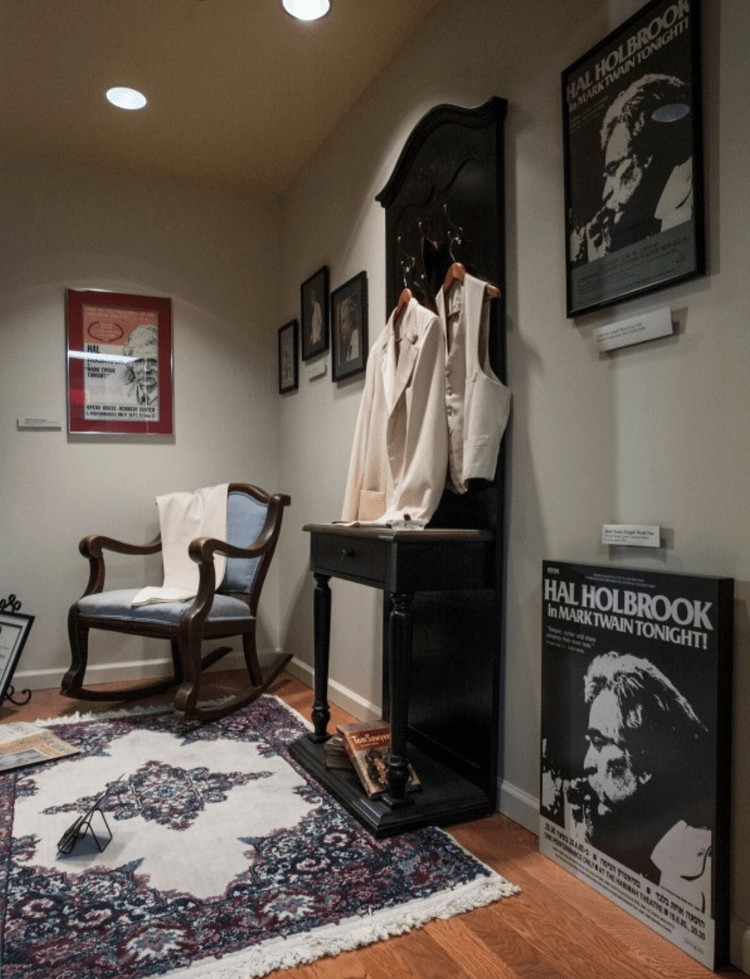
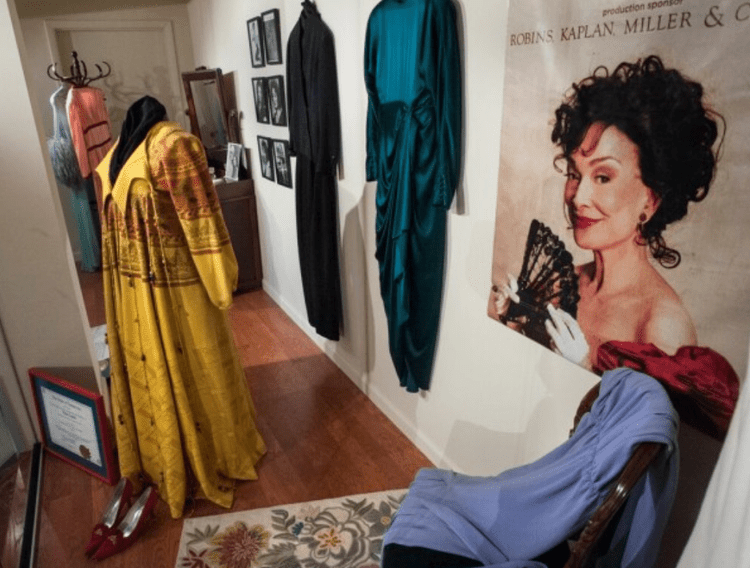
The Dixie was built on the court square of Huntingdon, TN. Hal Holbrook gave his expertise during the building of the theater in the Dixie, which is why the theater is named after him.

The origins of The Dixie began in December of 1999 with Mayor Dale Kelley, who unveiled plans for The Dixie. The original idea had been to place the theater into the original buildings in place, which were 125 years old. However, in 2004 during early construction, a portion of the south wall of The Dixie collapsed. After a safety assessment, it was decided that the safest route was to completely demolish the existing buildings. The original buildings were demolished and bricks from the original buildings were used throughout the Dixie when building The Dixie.

The Hal Holbrook Theater has hosted many great performances. Some include the following: New York City Ballet, Nashville Symphony, Richard Marx, Lady Antebellum, Ronnie Milsap, Carol Channing, Sara Evans, and the Glenn Miller Orchestra, just to name a few.

In addition to The Dixie’s webpage, information on this page came from volopedia.lib.utk.edu/entries/dixie-virginia-carter. Come visit The Dixie! You’ll be glad you did!

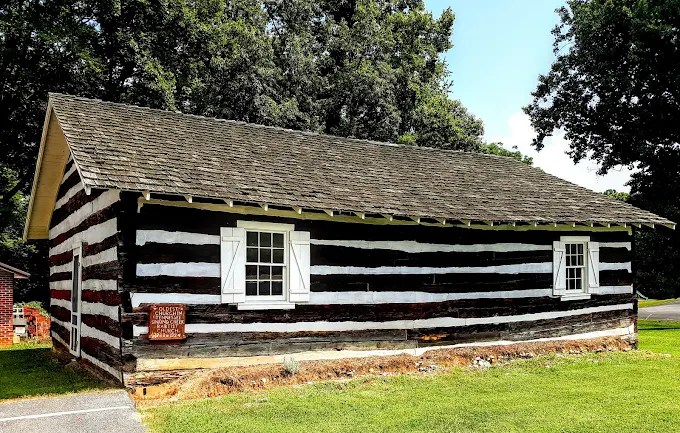
Liberty All Church, Huntingdon TN

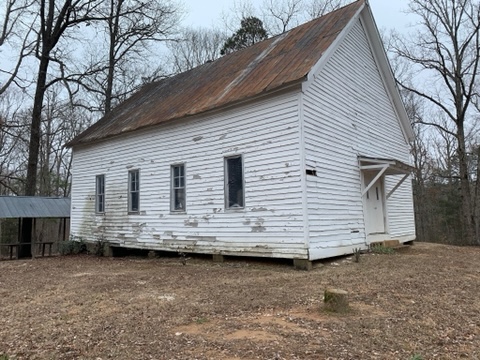
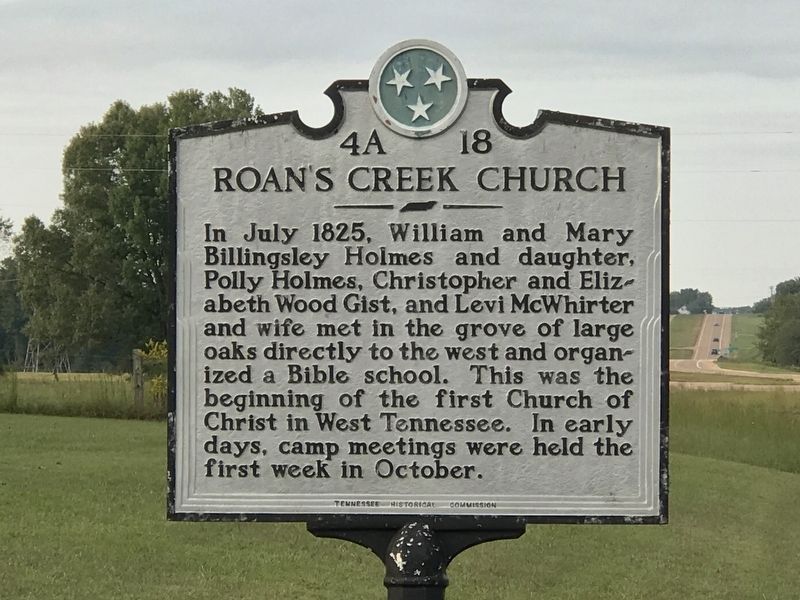
On October 18, 2023 Ms. Carolyn Espey gave a presentation before the Huntingdon TN Historical Society regarding Liberty All Church, which was established in 1855. It is over 170 years old. Liberty All Church is one of the older churches in Carroll County. Other long established churches in Carroll County include Roan’s Creek Church of Christ in Clarksburg, Palestine Church in Clarksburg, and Hollow Rock Primitive Baptist Church in Bruceton, TN. Roan’s Creek was established in 1825, Palestine dates back to around 1830, and Hollow Rock Primitive Baptist was established in 1823.

Liberty All hosts an annual Memorial Day Service for all the veterans. The church bell is also original to the church. At the Memorial Day Service, they have a guest speaker who is a veteran, all the veterans in attendance are recognized, and the 75 veterans who are buried in Liberty All’s cemetery will be read. Flags are also placed on all the veteran’s graves.

The State of Tennessee is rich with such history. Sinking Creek Baptist Church in Johnson City is considered to be the oldest church in Tennessee and was founded in 1772. The pioneer churches of Carroll County included Baptists, Primitive Baptists, Presbyterians, Cumberland Presbyterians, and Methodist.

Above, Sinking Creek Baptist Church in Johnson City.

Above, Palestine Church

Max Crockett, Huntingdon Native and World War II Hero

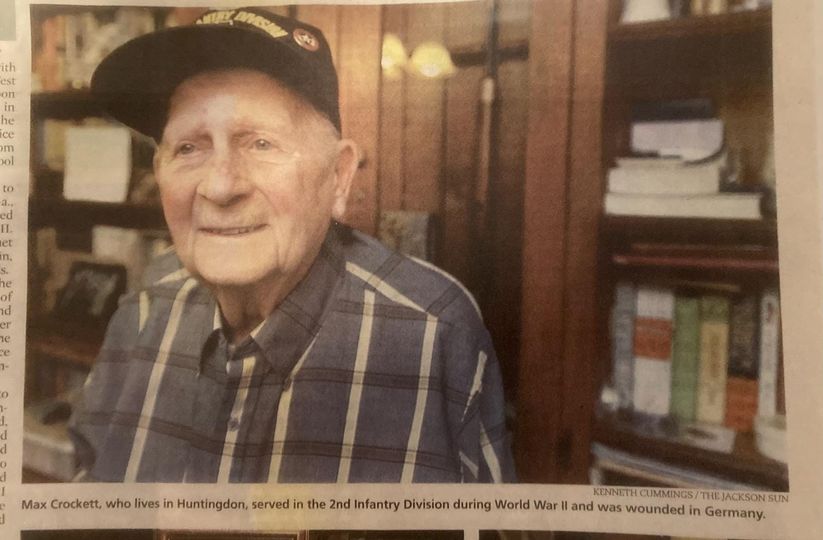
On February 21, 2024, Jimmy Crockett, son of Max Crockett, was the Storyteller for the Huntingdon TN Historical Society. Jimmy Crockett gave a presentation on his father, Max Crockett.

Max Crockett was born on August 20, 1922 in Wildersville, Tennessee. He graduated from Huntingdon High School in 1940, where he was a three sport athlete. In January of 1943, Max Crockett left Huntingdon and began military training at Camp Oglethorpe, near Macon, Georgia. He also received military training at Camp McCoy in Wisconsin. In October of 1943, he left the United States and traveled overseas to Belfast, Ireland.

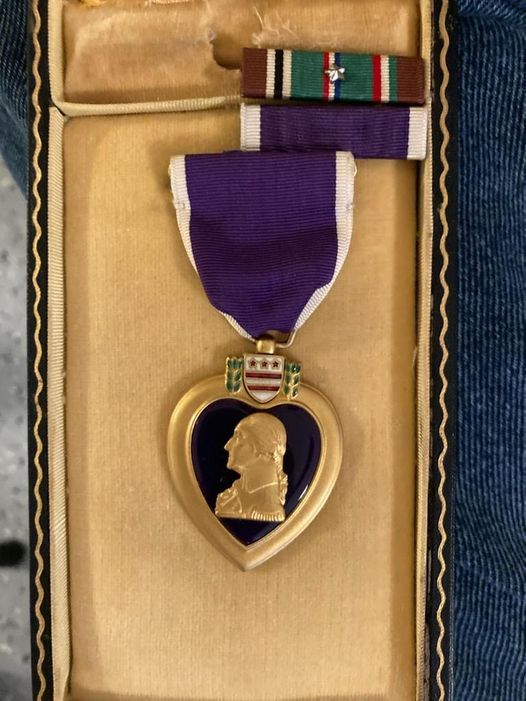
In his service to the US military during WWII, he served in various locations in Europe, including England, Wales, France, Belgium, Germany, and Czechoslovakia. He served during the Normandy Invasion on June 6, 1944 and was in the second wave that landed on Normandy. Max Crockett was also present and serving at the Battle of the Bulge, where his squadron met up with a German squadron. Max Crockett received the Purple Heart for his bravery during the Battle of the Bulge.

On August 24, 1944, Max Crockett was awarded the Bronze Star for gallantry for his service in France. Max Crockett served in WWII from October of 1943 until the end of the war in 1945. By the end of the war, he was a Staff Sergeant.

Following service in WWII, Max Crockett worked for the United States Postal Service and retired in 1979. He died on February 21, 2016.

Three Active Duty American Soldiers Running Through a horizontal image of a field of stars and stripes. Battle ready and running. Sepia Toned. Grain. Composite Image.

Tennessee is known as the Volunteer State. In WWII, there were three military camps in Tennessee that trained troops. They were Camp Forrest, Fort Campbell, and Fort Tyson. There were also several small air bases that trained pilots. In WWII 315,501 Tennesseans served in the military. 5,731 servicemen lost their lives.

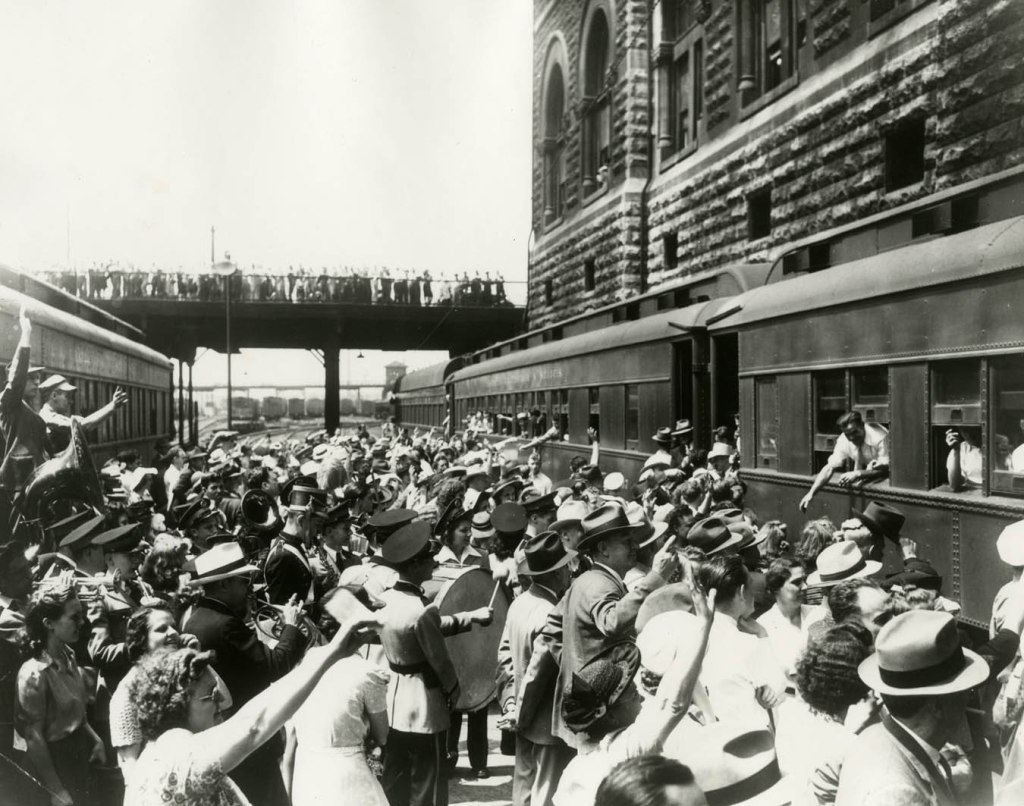
Above is a crowd saying goodbye to troops at Union Station, Nashville.

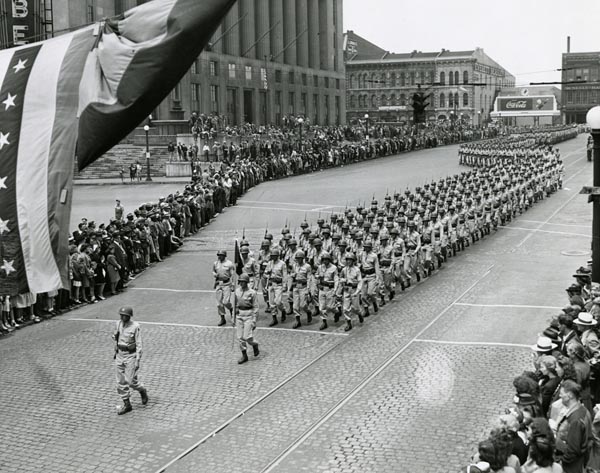
Above is a WWII Victory Parade in 1945 in Nashville, Tennessee.

Besides information received from Jimmy Crockett during his presentation, this article also has information/pictures from the Tennessee State Library and Archives.

An Ill-Fated Plane Crash in Huntingdon, Tennessee

https://www.facebook.com/reel/851480247004438

Above is a link to the video presentation made at the Huntingdon TN Historical Society meeting on this plane crash. The storyteller was local attorney Kent Jones.

On February 26, 1954, aboard a Fairchild C-119 Flying Boxcar, a crew of four people took off from Fort Benning-Lawson Air Force Base in Columbus, Georgia on a training flight to Maxwell Air Force Base in Montgomery, Alabama. The crew consisted of the following:

1st Lt Jack C. Jenkins, pilot,
2nd Lt John C. Peachey, copilot,
A2c Franklin D. Levy, flight engineer,
A2c David A. Probus, flight engineer.

The pilot, 1st Lt Jack C. Jenkins, was from Huntingdon, Tennessee. Lt. Jenkins was an experienced pilot with an unblemished record. He had flown combat missions in Korea. As he was from Huntingdon, it had been a goal of his to buzz the town of Huntingdon. After leaving Fort Benning, Lt. Jenkins had decided to modify his schedule and Lt. Jenkins flew towards Huntingdon, Tennessee.

As Lt. Jenkins approached the town of Huntingdon, he dropped to 700 feet and went over the courthouse and the High School and the Elementary School. There children outside playing on the playground at this time. Jenkins then turned toward the town of Bruceton, turned, and headed to downtown Huntingdon. He aimed toward the courthouse.

At the time, there were about 50 people on the second floor of the courthouse and about 30 people on the first floor and basement of the courthouse. Business in the town stopped and everyone looked skyward. While headed to the courthouse, Lt. Jenkins realized that he was too low and he attempted to raise the plane. The plane’s speed was about 240 knots and, due to the stress on the plane, rivets on the plane started to pop off. The plane clipped the top of a house. The plane missed the courthouse by about five yards.

Unable to raise the plane and divert the accident, the plane crashed into a cornfield (present day Walmart parking lot). The plane caught fire and all four men who were in the plane perished. Burning gasoline from the plane injured two men who had been working in a nearby field.

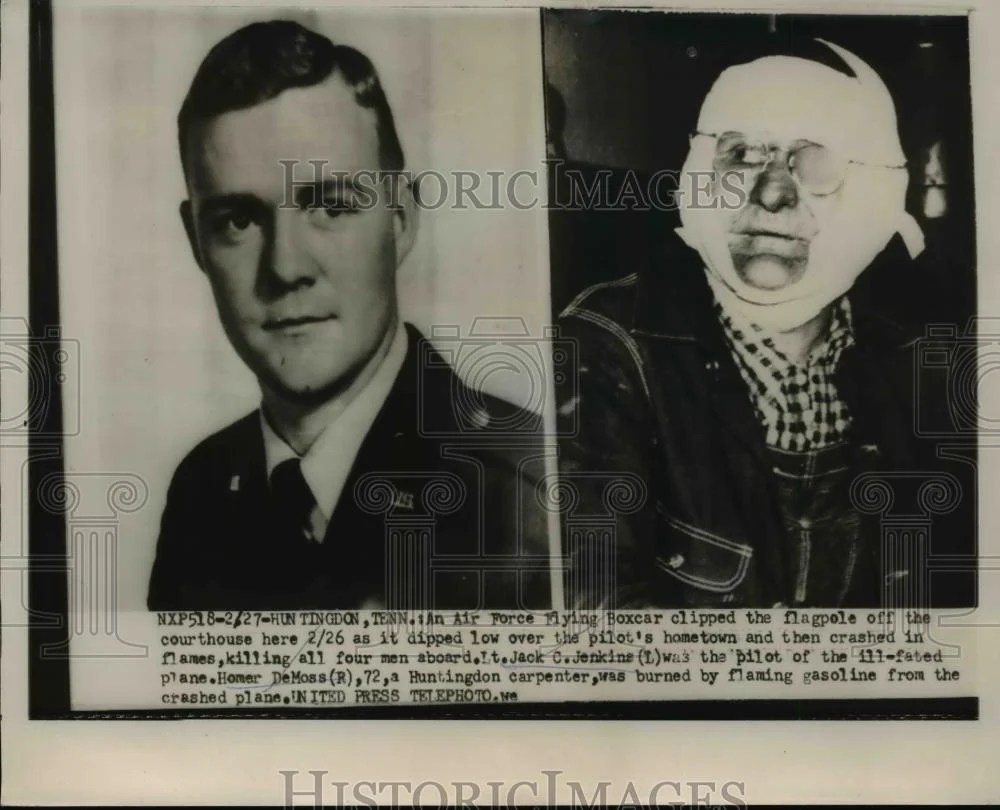
Above, 1st Lt. Jack C. Jenkins and Homer Demoss, a Huntingdon native who was injured during the plane crash.

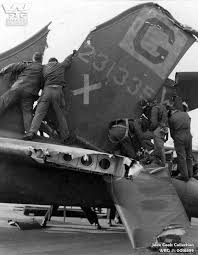
Above, picture of the crashed plane.

Above, a picture of a Fairchild C-119 Flying Boxcar.

Lt. Jenkins had graduated from Huntingdon High School, and then from Bethel College. When the Korean War broke out, Lt. Jenkins enlisted in the Air Force. When his overseas tour was over, he was placed into the 777th Troop Carrier Squadron. On the date of the crash, the three other crew members in the plane were inexperienced.

Besides the presentation by Kent Jones, information for this article came from the following sources: the Bureau of Aircraft Accidents Archives, the Aviation Safety Network, and sammcgowan.com.

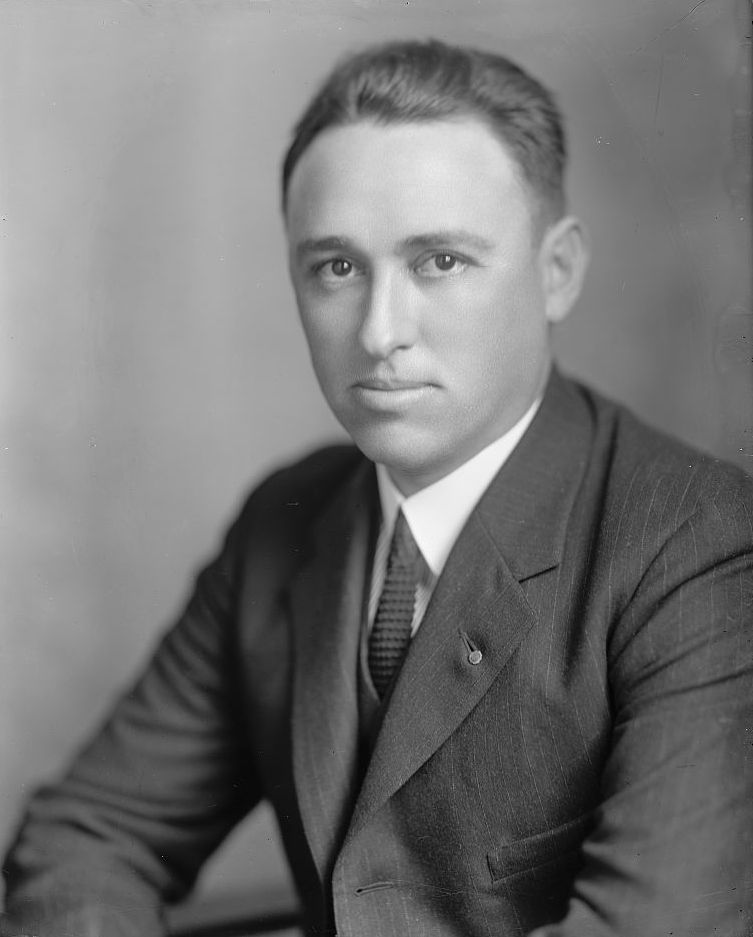
Gordon Weaver Browning

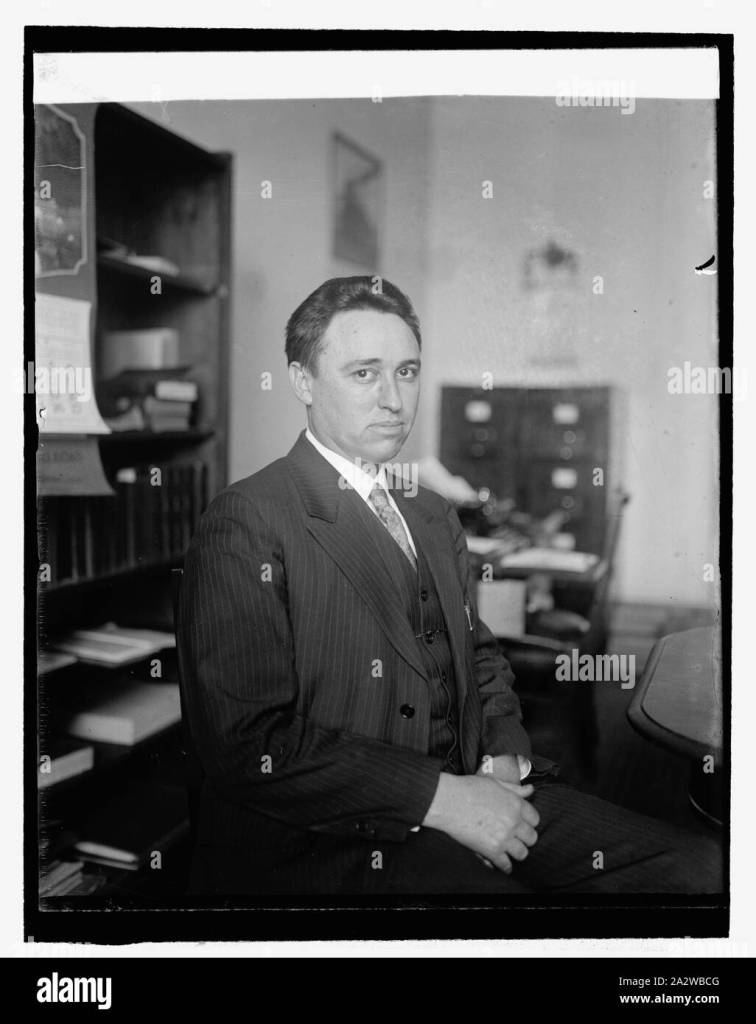
Gordon Weaver Browning was born in Carroll County near Atwood on November 22, 1889. He attended public schools until he began his college career. Gordon Browning received his B.S. at Valparaiso University in Indiana in 1913. He graduated from Cumberland University Law School in 1915. After being admitted to the bar, he began his law practice in Huntingdon, Tennessee.

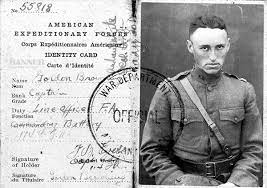
In 1917, Gordon Browning enlisted in the National Guard. While in the National Guard, he was promoted to First Lieutenant and Captain. Gordon Browning served in France during the first World War. In 1919, Gordon Browning was discharged from service and he then resumed his law practice in Huntingdon.

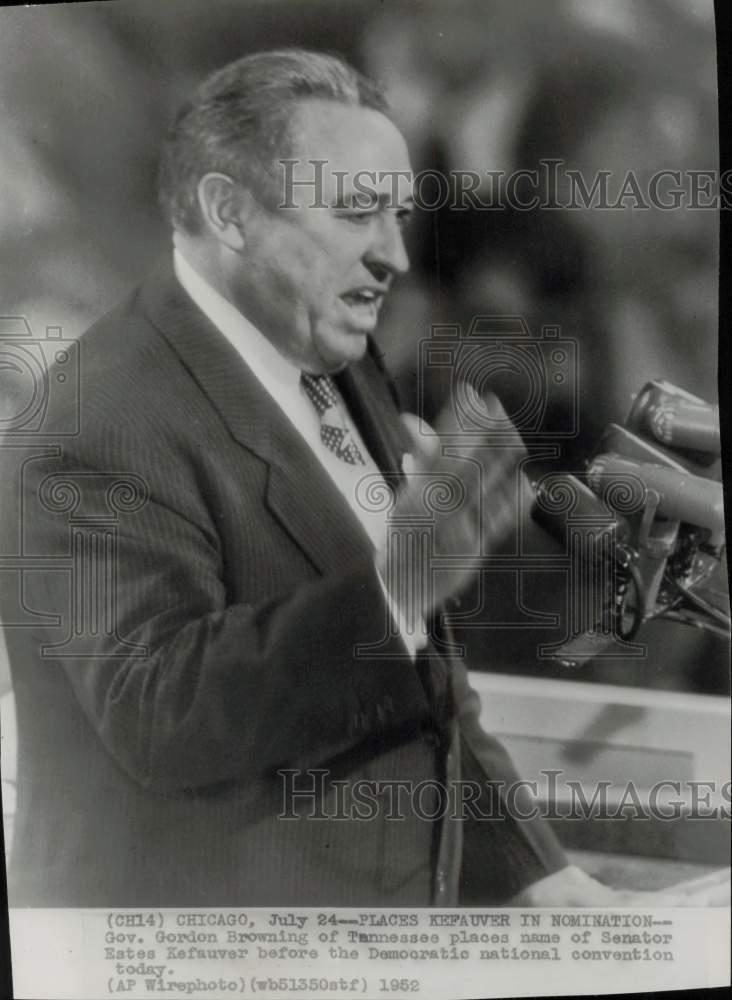
Gordon Browning served six terms in the United States House of Representatives from 1923 to 1935. Gordon Browning became the 38th governor of the State of Tennessee and served from 1937 to 1939.

On February 17, 1943, he was appointed captain in the United States Army and he advanced through the ranks to Lieutenant Colonel. During WWII, he acted as deputy head of the Belgium-Luxembourg missions until January of 1946.

From 1942-1949, Governor Browning served as the Chancellor of Tennessee’s Eighth Chancery District. Governor Browning again served another term as Governor of the State of Tennessee from 1949-1953.

While Governor of the State of Tennessee, Governor Browning had many achievements. He helped to bring Tennessee’s state debt down. He also established the first effective retirement system for teachers as well as establishing a minimum salary for teachers. The poll tax for women and veterans in the primary was abolished. This is but a few of the accomplishments.

Governor Browning has the distinction of serving in both World Wars. After retiring from his political career, Governor Browning returned to his law practice in Huntingdon, where he remained until his death in 1976. The City of McKenzie now has the Gordon Browning Museum where Governor Browning’s life is showcased.

For the video presentation of Governor Gordon Browning by local attorney Gus Radford, please go the following link:

https://www.facebook.com/61550545093433/videos/1834082150430973

Watson Lumber Company

Watson Lumber Company was founded in 1929 by Tobe Watson. The site of the lumber company was 114 W. Paris Street in Huntingdon, Tennessee. It was conveniently located on the court square. Watson Lumber Company remains in business today and is also remains on the same site. Watson Lumber Company has been in business for 96 years.

Crocker Watson, Tobe Watson’s son, took over management of the company from Tobe Watson. Crocker Watson managed the business until his death in 1969, when James Crocker Watson, Jr took over management along with his mother, Kathryn Watson.

In the 1980’s, James Crocker Watson and his mother purchased the building next door to the lumber company and expanded the business to include what would become The Hardware House.

In 2013, the business was sold to Seth and Jill Bennett who continue to operate the business to this day. The business offers many services that include: building materials, plumbing and electrical materials, hardware and tools, as well as paint and paint supplies. They offer flooring and outside materials like fencing. They also make keys.

Seth Bennett, the current owner, did give a presentation of the history of the Watson Lumber Company to the Huntingdon TN Historical Society on August 21, 2024. The Huntingdon TN Historical Society presents a different speaker every month. The society meets every 3rd Wednesday of the month at 9:00 a.m.