H.I.S. Company and Sam Siegel

https://www.facebook.com/stories/122124455978018169/UzpfSVNDOjk1NzgwMzY2NjQzNDM1MA==/?view_single=1
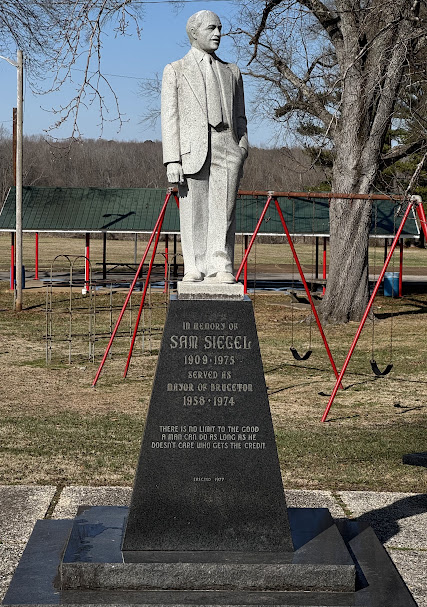
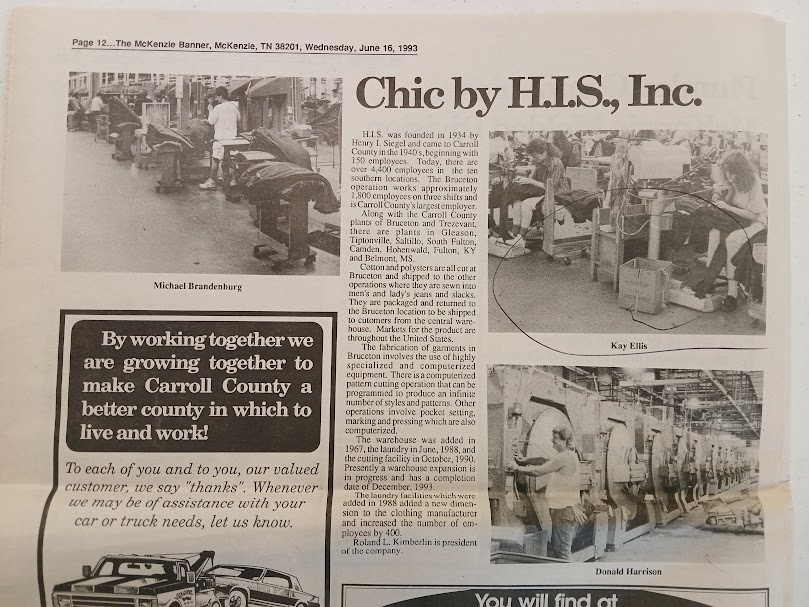
On April 16,2025, Mrs. Linda Allen was the Storyteller for the Huntingdon TN Historical Society. Mrs. Allen spoke about the H.I.S. Company, which was located in Bruceton, Tennessee and also Sam Siegel, who was the Senior Vice President of H.I.S. Mrs. Linda Allen grew up in the town of Bruceton and many of her relatives worked for the H.I.S. company.
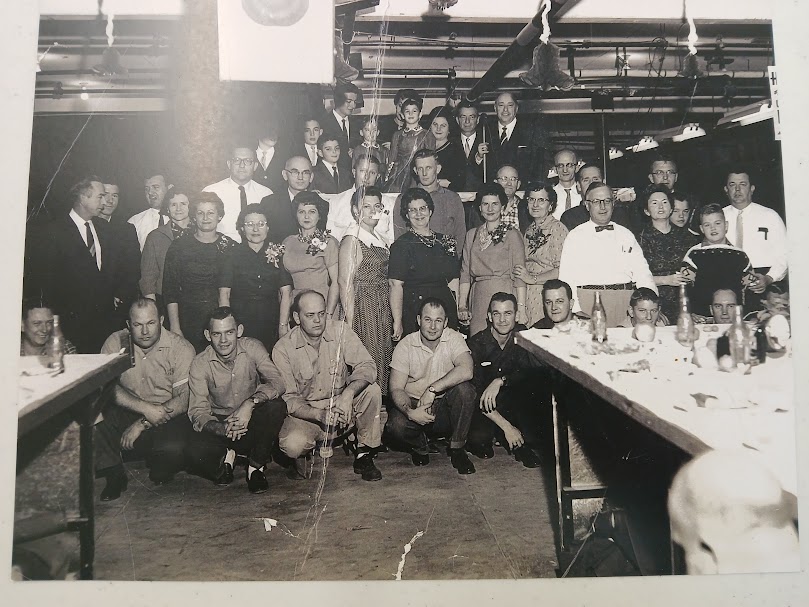
Mrs. Allen’s father is pictured with other workers in the picture above. This picture was taken approximately 1960 during a Christmas party.

Henry Siegel came to America from Lublin, Poland in the early 1900s. He began the company as Honesdale Manufacturing in 1923. The company headquarters were located in New York City. Honesdale Manufacturing specialized in men and boys clothing. There was one factory in Scranton, Pennsylvania and also a plant located in Germany.

In 1935 due to the persecution experienced in Europe, Sam Siegel, Henry’s brother, came to America. (The Siegel family did lose family members during WWII.) In 1936, Sam Siegel was sent to Dickson, Tennessee to the H.I.S. factory that was located there. The Dickson plant had been started in 1932. Sam then was sent to Bruceton, Tennessee where a new factory was being built. In 1939, trainees from Bruceton were being sent weekly to Dickson, Tennessee to be trained. The trainees boarded a train on Sunday evening to go to Dickson. They would spend the week in Dickson, and then on Friday afternoon at 4:00 p.m., the trainees would return to Bruceton via train. Bruceton was a railroad town and therefore had daily access to a train.

Prior to the factory being completed in 1940 in Bruceton, sewing machine workers worked in an old church building located in Bruceton on Highway 70. That old church building still stands today and can be seen as you pass through the town of Bruceton. Fifty people worked in that old church building.

In 1940, wages were 40 cents an hour. During WWII, as many as 1,000 employees worked at the factory. H.I.S. made military clothing, as well as other clothing. In 1949, Henry Siegel died unexpectedly and his son, Jesse, took over the company.
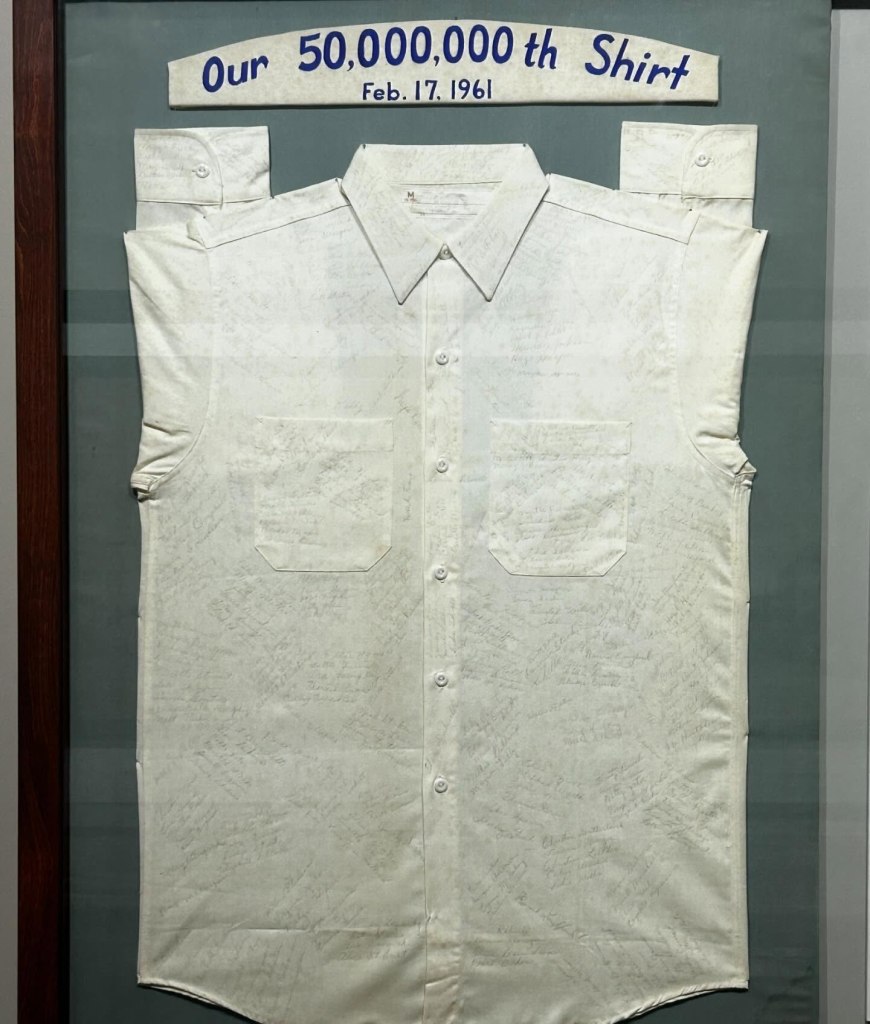
In 1961, the fifty millionth shirt was completed in Dickson, Tennessee. That shirt is pictured above
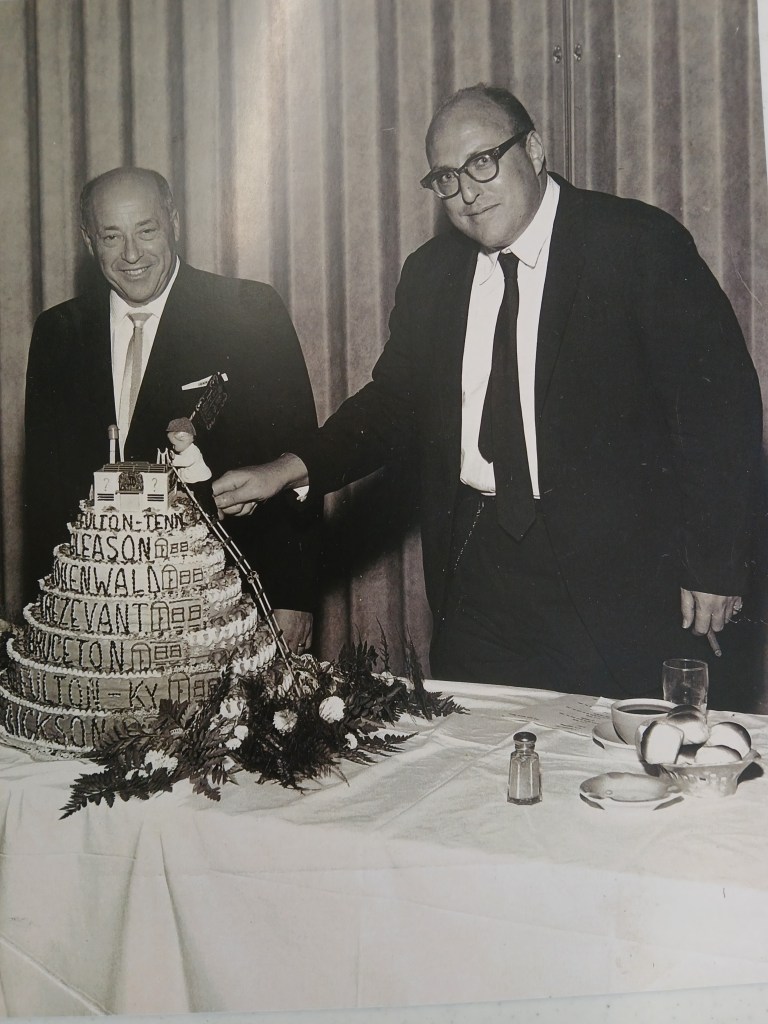
H.I.S. began making women’s clothing in 1964. By the mid 1980’s, H.I.S. was the third largest maker of women’s clothing. In the 1970’s, imported clothing into the United States began to hurt the H.I.S. business. Then NAFTA was implemented in 1994 and many companies began to move to Mexico. This greatly hurt manufacturing in the United States. It is estimated that between 4.5 million jobs and 8.9 million jobs were lost in the United States due to NAFTA. The Bruceton H.I.S. plant closed in 2000. Where once the H.I.S. Outlet stood, now there is a Dollar Tree/Family Dollar store.
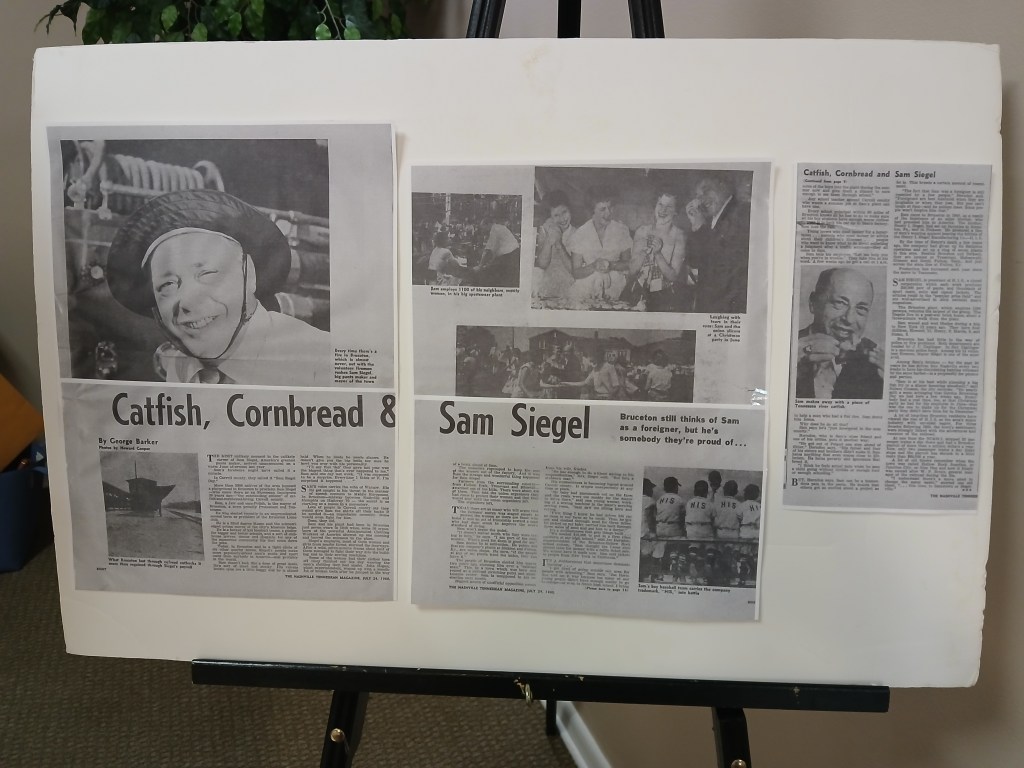
Pictured above is an article regarding Sam Siegel. Besides many other ventures, Sam Siegel also helped out the Volunteer Fire Department in Bruceton.

Sam Siegel was born in 1909 in Poland. He came to America in 1935, was sent to the Scranton, Pennsylvania plan, and then in 1936 was sent to the plant in Dickson, Tennessee. Following plans to build a plant in Bruceton, TN, Sam and his family moved to Bruceton. The plant was completed in Bruceton in 1940. Prior to that, sewing machine workers worked in an old church building located on Highway 70.

Sam Siegel became mayor of Bruceton in 1958 and was mayor of Bruceton until 1974. He died in May of 1975.

By people who lived and worked with him, Sam Siegel was known as a charitable person. He gave jobs to teenagers and others who needed jobs. Linda Allen stated that Sam Siegel and H.I.S. had been very good to her family. There are many others who felt the same way.

The Huntingdon TN Historical Society would like to thank Mrs. Linda Allen for her presentation. There is a video of Mrs. Allen’s presentation on the Huntingdon TN Historical Society facebook page. The URL is at the top of this article.

The Huntingdon TN Historical Society meets every third Wednesday of the month at 9:00 a.m. in the conference room of City Hall in Huntingdon, Tennessee.
Three Prominent Tennesseans

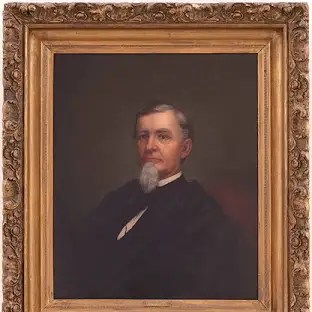
On November 20, 2024 Judge Donald Parish spoke at the Huntingdon TN Historical Society. His program revolved around three prominent Tennesseans from the past: Justice Howell Edmunds Jackson, Attorney Milton Brown, and Judge John Ethridge McCall.

Justice Howell Edmunds Jackson was born April 8, 1832 in Paris, Tennessee, was the son of a wealthy family. In 1840, the family moved to Jackson, Tennessee. He graduated from West Tennessee College in 1849. He then attended the University of Virginia at Charlottesville and graduated in 1854. Justice Jackson then studied law at Cumberland University in Lebanon Tennessee. He graduated in 1856. Judge Jackson was admitted to the bar and began practicing law in Jackson, Tennessee. Judge Jackson then moved to Memphis, Tennessee.

During the Civil War, Judge Jackson was pro-slavery and was opposed to succession. While in the Confederacy, Judge Jackson was a receiver of sequestered property. In 1862, the Union Soldiers ran the Confederates out of the government in West Tennessee. Following the Civil War, Judge Jackson was charged with treason. He was pardoned by President Johnson and was allowed to practice law again.

In 1874, Judge Jackson returned to Jackson and served on the court of arbitration for West Tennessee by appointment on two occasions. In 1880, Judge Jackson was elected as State Representative. He then was elected to the United States Senate and served from March 4, 1881 to April 14, 1886.

Judge Jackson resigned from the Senate because he had been offered and he had accepted the appointment of United States Circuit Judge for the sixth Federal Circuit. Due to the death of Lucius Q. C. Lamar, a vacancy became available on the United States Supreme Court. Judge Jackson was appointed by the President and was confirmed by the Senate to that open position on the Supreme Court. Judge Jackson served on the Supreme Court from March 4, 1893 to August 8, 1895, when Judge Jackson died. Judge Jackson died in West Meade, Tennessee.

Two interesting facts about Judge Jackson: First, while on the Supreme Court, a question regarding the income tax was raised before the Supreme Court. The income tax was held to be unconstitutional by the court, however, Judge Jackson had sided with the government on this decision. Secondly, Judge Jackson was the only Supreme Court Justice to license his image to the cigar company. Do you recognize him?

M

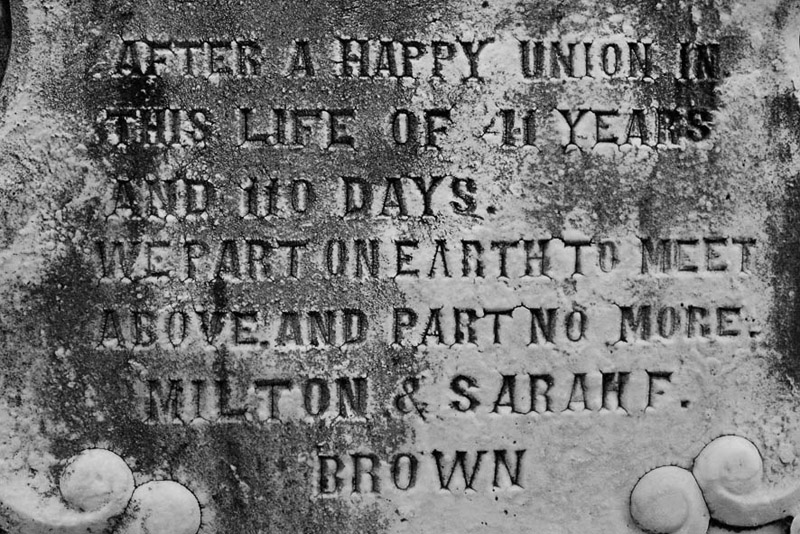
Milton Brown, pictured above, was born in 1804 in Ohio. He migrated to Nashville in 1823, where he studied law in the office of Felix Grundy. After being admitted to the bar, Milton Brown practiced law in Paris, Tennessee. In 1832, Milton Brown moved to Jackson, Tennessee where he became actively involved in the community.

In 1834, the notorious criminal John Murrell had been apprehended and charged with theft and murder. A list of the many crimes that John Murrell committed included counterfeiting, horse theft, and slave stealing, all considered to be very serious crimes in the pre-civil war south. John Murrell was so notorious and disliked at this time, that no one wanted to represent John Murrell. It was then that Judge Joshua Haskell appointed Milton Brown to defend John Murrell.

Milton Brown’s strategy was to concede to the theft, but defend as to the murder charges. Milton Brown’s oratory and defense skills were so good, that John Murrell was found not guilty of murder and guilty of theft. As a result, John Murrell spent ten years in prison.

Milton Brown was appointed Chancellor of West Tennessee in 1837 and in 1839 he ran as the Whig nominee for the United States House of Representatives, which position he won. In 1845, Milton Brown was responsible for the deadlocked breaking resolution which allowed Texas into the Union.

Later in life, Milton Brown became president of the Mississippi Central and Tennesee railroads from 1854-1856. He was then president of the Mobile and Ohio railroads from 1856-1871. Milton Brown was a charitable person and was instrumental in the founding of Union, Lambuth, and Vanderbilt universities. Milton Brown died in 1883 and was laid to rest in Jackson’s Riverside Cemetery.

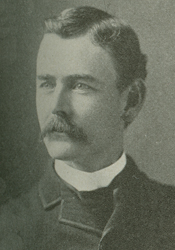
John Ethridge McCall, pictured above, was born in 1859 in Clarksburg, Tennessee. He graduated from the University of Tennessee at Knoxville in 1881. He then studied law in Huntingdon, Tennesee. He was admitted to the bar in 1882 and began his practice of law in Huntingdon, TN. Also, in 1882, he became the editor of the Tennessee Republican. He became a member of the State house of representatives from 1887-1889. He was appointed assistant United States district attorney for West Tennessee in 1890. He was elected as a Republican to the Fifty-fourth Congress and served from March 4, 1895 – March 3, 1897. He was a candidate for Governor of the State of Tennessee in 1900. From 1902 – 1905, John McCall was a collector for the Internal Revenue Service. On January 17, 1905, he was appointed by the President of the United States to United States District Judge for the western district of the State of Tennessee. Judge McCall remained on the district court until his death on August 8, 1920. He was laid to rest at Forest Hill Cemetery in Memphis, Tennessee.

While most of the information gleamed for this article came from the Honorable Judge Donald Parish, this writer also needs to acknowledge information also came from TBA Law Blog in an article written by Russell Fowler, the Tennessee Encyclopedia in an article written by Russell Fowler, and information was gleamed from History, Art, and Archives United States House of Representatives.

The Huntingdon TN Historical Society has a Facebook page where there is a video of Donald Parish presenting this history. Please come and join us in learning and sharing the history of Carroll County and of the State of Tennesse.

Southern Normal University

On January 15, 2025, Johnny Beth Nolen was the speaker at the January meeting of the Huntingdon TN Historical Society. Johnny Beth spoke on the history of Southern Normal University.

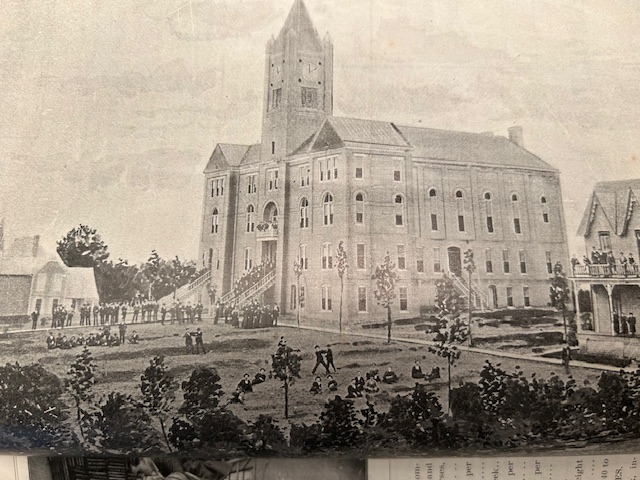
Pictured above, Southern Normal University was a private college that was built in Huntingdon, Tennessee. The college was chartered in 1890 and the college opened in 1891. The Huntingdon site was chosen due to the location of the railroad, the water, and the citizens of the town of Huntingdon. The school from 550 students to over 890 students. The college operated successfully for 11 years. The school closed in 1902.

In 1908, J. H. Bayer bought the Southern Normal University buildings and the buildings were re-purposed to become the Industrial Training School. J. H. Bayer was the superintendent until the school closed in 1918. At that time, the site of Southern Normal University became Huntingdon High School.

In 1935, a new building was constructed by the WPA. Huntingdon High School had a bell tower, and the bell in the bell tower came from the bell tower of Southern Normal University. Mr. Leroy Tate had found the bell and the bell was later placed in the high school’s bell tower.

If you would like more information on Southern Normal University, please see our Facebook page at Huntingdon TN Historical Society, where a video of the speech is available.

Carroll County Court Theater

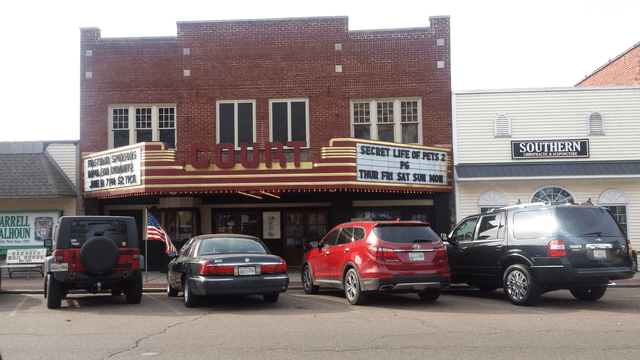
On March 19, 2025, Dixie Atkinson gave the history of the Court Theater. The Court Theater is located in Huntingdon, TN. Dixie Atkinson and her husband, Jacky Atkinson, purchased the building in 2010.

Ms. Linnie McCracken Carter was the original owner of the Court Theater. She bought the lot that the building is sitting on from Lewis F. Johnson, and in 1929, Ms. Linnie opened the Court Theater. During the 1920’s and through the 1940’s, the Carroll County Fair was held at the court square, where the theater is located. During the county fair, talent shows and other events were held at the Court Theater.

In 1940, Ms. Linnie sold the theater to Rockwood Amusements, Inc. In 1986, the theater was sold to Carl and Letha Holland, who then sold the theater to Rayburn and Brenda O’Brien in 1987. In 1995, the O’Brien’s sold the theater to Leslie E. Curtis, otherwise known as Mr. Les. Mr. Les ran the theater for fifteen years before selling the theater to Dixie and Jacky Atkinson. Except for a small reconstruction period in 2010, the Court Theater has been in continuous use for the past 96 years.

For a video of the presentation, and to learn more about the Huntingdon TN Historical Society, please see our Facebook page at Huntingdon TN Historical Society.

Huntingdon TN Historical Society

On May 10, 2023, the Huntingdon TN Historical Society had an organizational meeting. The first official meeting was on June 21, 2023. The first Storyteller for the Huntingdon TN Historical Society was on July 19, 2023. The Storyteller was Lisa Tippett and she spoke about the Tucker family from Westport. The organization was the brainchild of Johnny McClure, Johnny Beth Nolen, and Lisa Tippett. The organization was begun so that local history and lore could be preserved and shared amongst citizens. Every month, a speaker is present to give their historical perspective on a local subject. The history presented revolves around Carroll County happeningsThe meeting is held on the third Wednesday of every month.