
On November 20, 2024 Judge Donald Parish spoke at the Huntingdon TN Historical Society. His program revolved around three prominent Tennesseans from the past: Justice Howell Edmunds Jackson, Attorney Milton Brown, and Judge John Ethridge McCall.
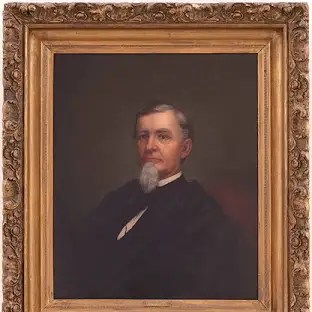
Justice Howell Edmunds Jackson was born April 8, 1832 in Paris, Tennessee, was the son of a wealthy family. In 1840, the family moved to Jackson, Tennessee. He graduated from West Tennessee College in 1849. He then attended the University of Virginia at Charlottesville and graduated in 1854. Justice Jackson then studied law at Cumberland University in Lebanon Tennessee. He graduated in 1856. Judge Jackson was admitted to the bar and began practicing law in Jackson, Tennessee. Judge Jackson then moved to Memphis, Tennessee.
During the Civil War, Judge Jackson was pro-slavery and was opposed to succession. While in the Confederacy, Judge Jackson was a receiver of sequestered property. In 1862, the Union Soldiers ran the Confederates out of the government in West Tennessee. Following the Civil War, Judge Jackson was charged with treason. He was pardoned by President Johnson and was allowed to practice law again.
In 1874, Judge Jackson returned to Jackson and served on the court of arbitration for West Tennessee by appointment on two occasions. In 1880, Judge Jackson was elected as State Representative. He then was elected to the United States Senate and served from March 4, 1881 to April 14, 1886.
Judge Jackson resigned from the Senate because he had been offered and he had accepted the appointment of United States Circuit Judge for the sixth Federal Circuit. Due to the death of Lucius Q. C. Lamar, a vacancy became available on the United States Supreme Court. Judge Jackson was appointed by the President and was confirmed by the Senate to that open position on the Supreme Court. Judge Jackson served on the Supreme Court from March 4, 1893 to August 8, 1895, when Judge Jackson died. Judge Jackson died in West Meade, Tennessee.
Two interesting facts about Judge Jackson: First, while on the Supreme Court, a question regarding the income tax was raised before the Supreme Court. The income tax was held to be unconstitutional by the court, however, Judge Jackson had sided with the government on this decision. Secondly, Judge Jackson was the only Supreme Court Justice to license his image to the cigar company. Do you recognize him?
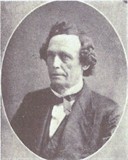
Milton Brown, pictured above, was born in 1804 in Ohio. He migrated to Nashville in 1823, where he studied law in the office of Felix Grundy. After being admitted to the bar, Milton Brown practiced law in Paris, Tennessee. In 1832, Milton Brown moved to Jackson, Tennessee where he became actively involved in the community.
In 1834, the notorious criminal John Murrell had been apprehended and charged with theft and murder. A list of the many crimes that John Murrell committed included counterfeiting, horse theft, and slave stealing, all considered to be very serious crimes in the pre-civil war south. John Murrell was so notorious and disliked at this time, that no one wanted to represent John Murrell. It was then that Judge Joshua Haskell appointed Milton Brown to defend John Murrell.
Milton Brown’s strategy was to concede to the theft, but defend as to the murder charges. Milton Brown’s oratory and defense skills were so good, that John Murrell was found not guilty of murder and guilty of theft. As a result, John Murrell spent ten years in prison.
Milton Brown was appointed Chancellor of West Tennessee in 1837 and in 1839 he ran as the Whig nominee for the United States House of Representatives, which position he won. In 1845, Milton Brown was responsible for the deadlocked breaking resolution which allowed Texas into the Union.
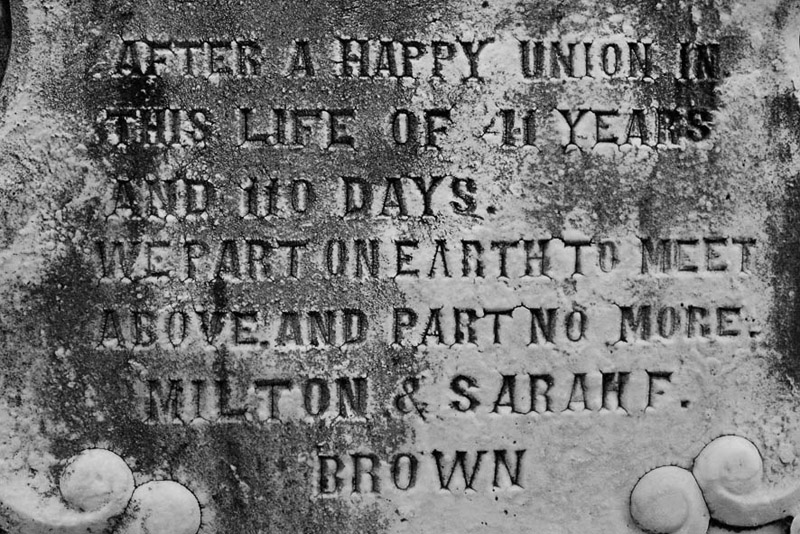
Later in life, Milton Brown became president of the Mississippi Central and Tennesee railroads from 1854-1856. He was then president of the Mobile and Ohio railroads from 1856-1871. Milton Brown was a charitable person and was instrumental in the founding of Union, Lambuth, and Vanderbilt universities. Milton Brown died in 1883 and was laid to rest in Jackson’s Riverside Cemetery.
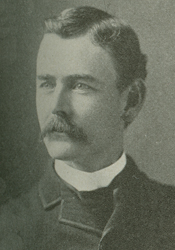
John Ethridge McCall, pictured above, was born in 1859 in Clarksburg, Tennessee. He graduated from the University of Tennessee at Knoxville in 1881. He then studied law in Huntingdon, Tennesee. He was admitted to the bar in 1882 and began his practice of law in Huntingdon, TN. Also, in 1882, he became the editor of the Tennessee Republican. He became a member of the State house of representatives from 1887-1889. He was appointed assistant United States district attorney for West Tennessee in 1890. He was elected as a Republican to the Fifty-fourth Congress and served from March 4, 1895 – March 3, 1897. He was a candidate for Governor of the State of Tennessee in 1900. From 1902 – 1905, John McCall was a collector for the Internal Revenue Service. On January 17, 1905, he was appointed by the President of the United States to United States District Judge for the western district of the State of Tennessee. Judge McCall remained on the district court until his death on August 8, 1920. He was laid to rest at Forest Hill Cemetery in Memphis, Tennessee.
While most of the information gleamed for this article came from the Honorable Judge Donald Parish, this writer also needs to acknowledge information also came from TBA Law Blog in an article written by Russell Fowler, the Tennessee Encyclopedia in an article written by Russell Fowler, and information was gleamed from History, Art, and Archives United States House of Representatives.
The Huntingdon TN Historical Society has a Facebook page where there is a video of Donald Parish presenting this history. Please come and join us in learning and sharing the history of Carroll County and of the State of Tennesse.
 The History of Carroll County, Tennessee